Imagine this: Somewhere in chemical production, a container is slowly running empty. Time is of the essence, but nobody in the company notices automatically. Instead, people ask, call and inquire - and that's when it gets expensive.
This is precisely the point at which many chemical logistics companies end up today: They have data - but not in the right form, at the right time and in the right system. And this is where the API comes into play.
API explained simply
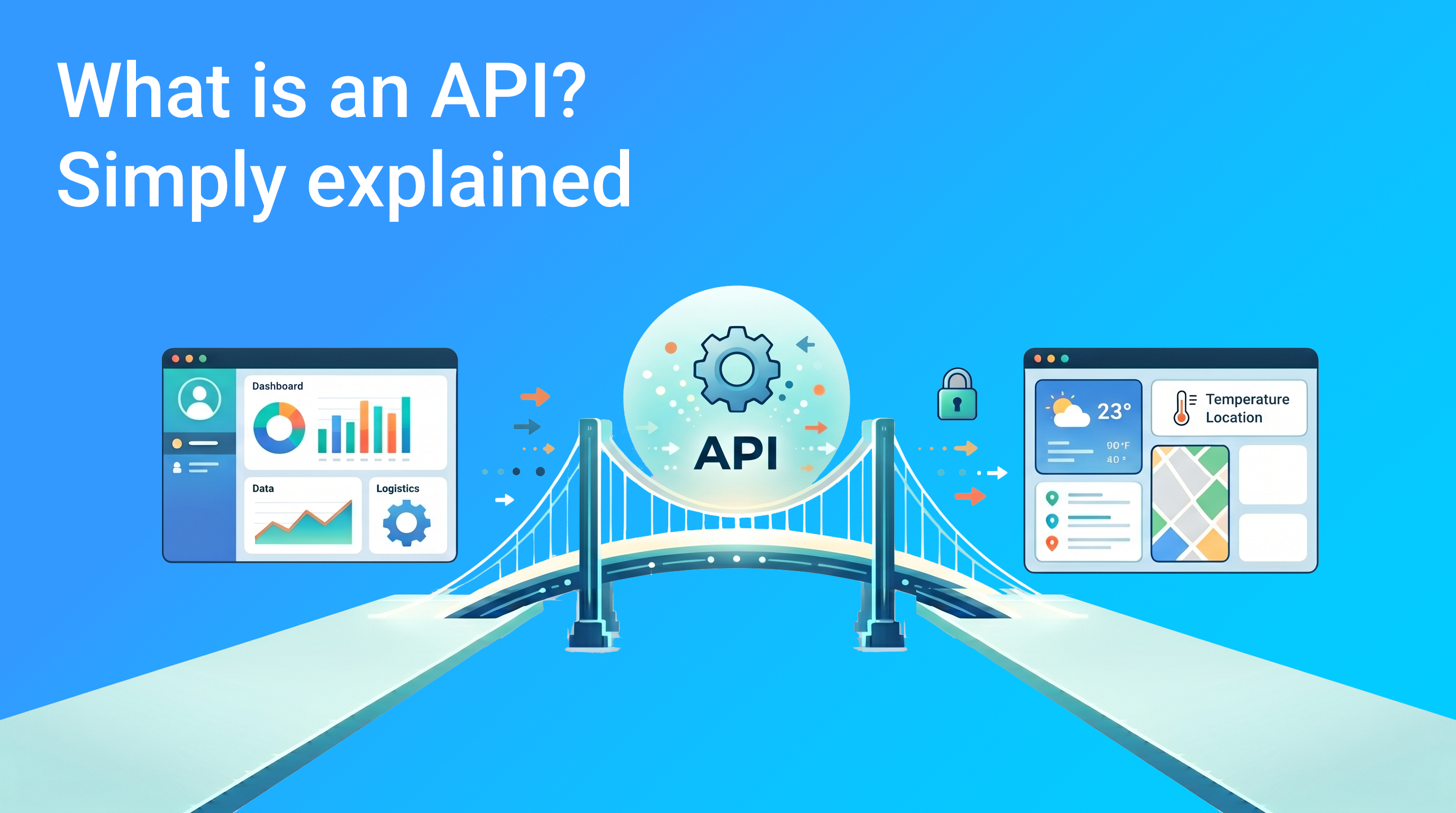
An API is basically a digital interface that allows two software systems to talk to each other - as if two people were communicating in different languages through a professional interpreter.
Instead of an employee having to copy data from emails, Excel spreadsheets or portals, the ERP, logistics platform or customer portal exchange information automatically, securely and in real time. This significantly reduces media disruptions, careless errors and unnecessary waiting times.
An example from chemical logistics:
An intelligent container reports that the fill level is critically low. This information is fed directly into the ERP or scheduling system via an API - and automatically triggers a repeat order, route planning or a service notification. From the sensor to the order, almost nothing is done manually.
Why APIs are so important in chemical logistics
In chemical logistics, everything revolves around three things: safety, adherence to delivery dates and container utilization.
If fill levels, temperatures or locations are only available in isolated systems, this creates precisely the problems that many companies are familiar with:
- For logistics management: no clear view of containers, stocks and delivery status - and therefore uncertain planning.
- For IT and digitalization: Many "isolated solutions" that do not automatically connect data and instead generate additional administrative work.
- For quality and safety: important status data arrives too late or not at all where it is needed.
- For customer service and sales: customers repeatedly ask questions because they do not receive proactive information.
APIs close these gaps. They turn data knowledge into real control information by ensuring that all relevant systems are connected.
The concrete benefits of an API for chemical logistics companies
- Less manual work, more process reliability
When ERP, platform and IoT applications automatically exchange data, many manual steps are eliminated. There is less duplication of work, fewer queries on the phone and fewer errors due to copy-paste. Especially with many IBCs, tank containers or stationary containers, this ensures more predictable and stable processes.
- Real-time data instead of flying blind
It is not only crucial that data exists, but that it arrives in the right system at the right time.
With an API, chemical logistics companies can:
- Trigger repeat orders before a bottleneck occurs at the customer.
- Detect delivery deviations at an early stage.
- Track container movements seamlessly.
- Escalate quality signals more quickly.
- Inform customers proactively - without long coordination loops.
- Better decisions for management
An API is not an IT toy, but a lever for economic goals. When logistics, inventory and status data flow together automatically, questions can be answered more clearly: What is the actual utilization of the container fleet? Where do transports regularly hit the wall? Which customers benefit from a close-knit service model?
This creates a powerful effect along the customer journey: companies often start with a transparency problem - and quickly discover how much automation, customer loyalty and new service models are possible as a result.
Who benefits most from API integrations?
- For problem-oriented interested parties
Anyone who suffers primarily from a lack of transparency, a high coordination effort or delayed responses does not need a large IT project to begin with. It is important to understand: An API connects existing data sources in such a way that operational processes run faster and more reliably.
- For solution-oriented interested parties
Anyone already looking for software, IoT or digital interfaces should make sure that the solution does not remain in the "silo principle". Real added value is only created when data can be integrated into existing ERP, customer and logistics systems.
- For product-oriented interested parties
Those who are already familiar with Packwise will want to know what specifically pays off. According to Packwise, it combines real-time data from intelligent containers, a digital supply chain platform and the ability to integrate this data directly into existing processes.
How Packwise stands out from the competition
Many providers supply data - but fewer help to turn it into measurable process benefits. Packwise combines smart container data, browser-based transparency, automation and ERP integration in one solution for the chemical industry.
This includes fill level, temperature, location and movement - all along digitally networked, cross-company supply chains. This is particularly relevant for chemical logistics companies that not only want to become "digital", but really want to work more efficiently and scalably.
Conclusion: API - more than just technology
An API is not an abstract IT topic. It is the basis for ensuring that data from light barriers, fill level sensors and logistics platforms is used where it creates real added value: in planning, scheduling, customer service, quality and management.
If you want to make supply chains more resilient, reduce manual processes and serve customers more proactively, there is no way around intelligent interfaces.
If you would like to know how real-time data, automation and API integration can be used in your chemical logistics, you can contact sales@packwise.de directly.