For distributors in the chemical industry, an efficient tote cycle is a critical factor for smooth delivery processes, reliable customer supply, and the economical use of available resources. These totes enable the safe transport and storage of liquid products and are used throughout the entire industrial supply chain.
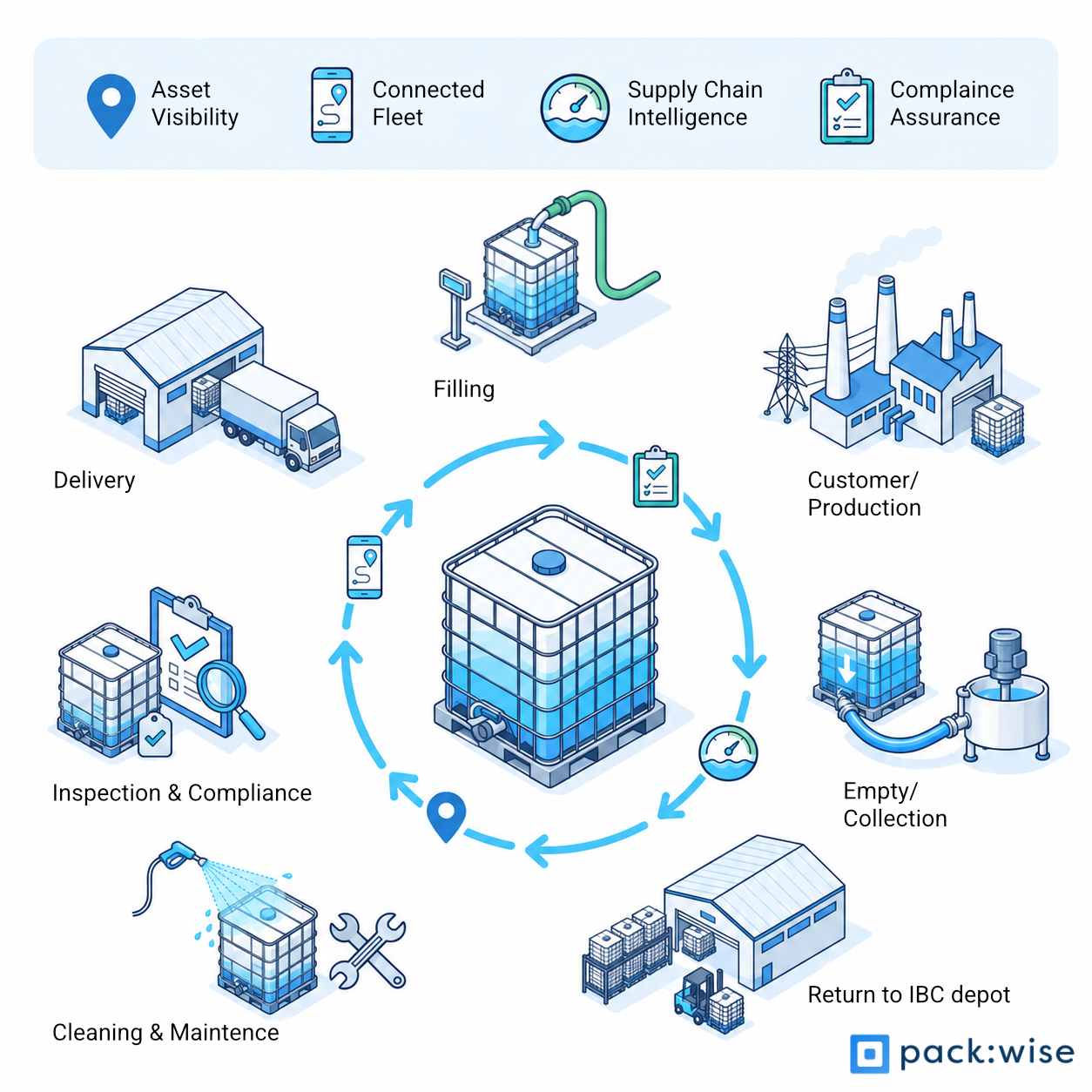
An Intermediate Bulk tote (IBC) passes through numerous stages during its lifecycle: from filling, through transport and use at the customer’s site, to retrieval, cleaning, and reuse. Coordinating these processes is particularly challenging for large tote fleets with many customer locations, as totes are often outside the distributor’s direct control for extended periods of time. Without up-to-date information on their location, fill level, and usage status, it is difficult to reliably assess the actual demand for totes.
With the Packwise Smart Cap and the Packwise Flow 2.0 software platform, distributors can digitally monitor their tote cycles, make processes more transparent, and manage their tote fleets more efficiently.
Key Points at a Glance
- The Packwise Smart Cap enables digital tracking of IBC fill levels, locations, temperatures, and movements.
- Packwise Flow 2.0 consolidates the data centrally and provides a better overview
of the entire tote fleet.
- Distributors can plan restocks, returns, and reuses more efficiently based on up-to-date tote data.
- Digital tote cycles help reduce long downtime, unnecessary transport, and excess tote inventories.
- Transparent tracking of reusable packaging can support companies in
organizing reusable systems.
Why control over tote cycles is becoming increasingly important for distributors
Distributors play a central role between manufacturers of chemical products and industrial end customers.
In addition to ensuring a reliable supply of products, they often also manage the transport and storage totes used. The efficient use of reusable IBCs is crucial to the cost-effectiveness of the entire tote fleet.
In practice, however, there is often a lack of visibility into where individual totes are located and when they will be available again. Without digital monitoring, this information is often recorded manually, which can lead to delays, unnecessary transport, and increased tote inventories.
The key challenge is to efficiently manage totes across multiple locations and ensure their availability. Smart sensor technology enables the automatic collection of relevant tote data, thereby laying the foundation for transparent, data-driven management of the entire tote lifecycle.
The tote Lifecycle: Seven Steps, One Connected Process
During its service life, an IBC passes through various stages that are closely interconnected. Each of these process steps influences the availability of the tote and, consequently, the efficiency of the entire cycle.
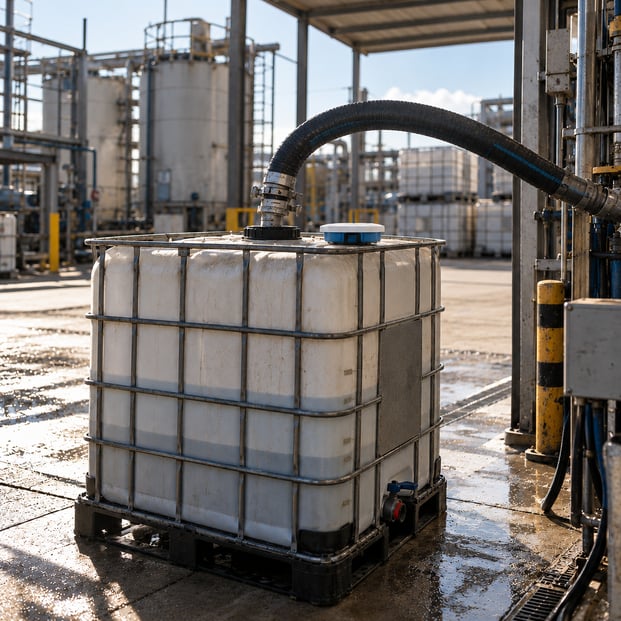
1. Filling
The tote cycle begins with the filling of the IBC at the depot or production site. The tote is then prepared for transport to the customer. Especially with large tote fleets, it is important to keep track of filled, available, and already scheduled totes.
With the Packwise Smart Cap, fill levels can be digitally recorded and viewed centrally in Packwise Flow 2.0.
This gives distributors a better overview of their tote inventories, allows them to monitor available capacity across locations, and helps them plan deliveries more efficiently.
 2. Use at the Customer Site or in Production
After delivery, the IBC is used at the customer’s site for storage and product dispensing. The service life varies depending on consumption and operational processes. Without digital monitoring, distributors often lack transparency regarding current fill levels, meaning consumption data must be collected manually.
With the Packwise Smart Cap, fill levels can be monitored remotely and viewed centrally in Packwise Flow 2.0. This allows distributors to track consumption, plan replenishments based on demand, and reduce bottlenecks as well as unnecessarily high safety stock levels.
3. Emptying and Pickup
As soon as a tote is nearly empty, planning for its return begins. Without digital monitoring, distributors often only learn that a tote is empty after receiving a notification from a customer. Delayed notifications can lead to longer downtime and limit the availability of the tote fleet. Particularly when dealing with a large number of customers and totes, such delays can affect the availability of the entire tote fleet.
With the Packwise Smart Cap, fill levels can be monitored remotely and impending emptying needs can be identified early on. This allows distributors to plan pickups in a timely manner, combine them with upcoming deliveries, and thereby reduce unnecessary transport trips and downtime.
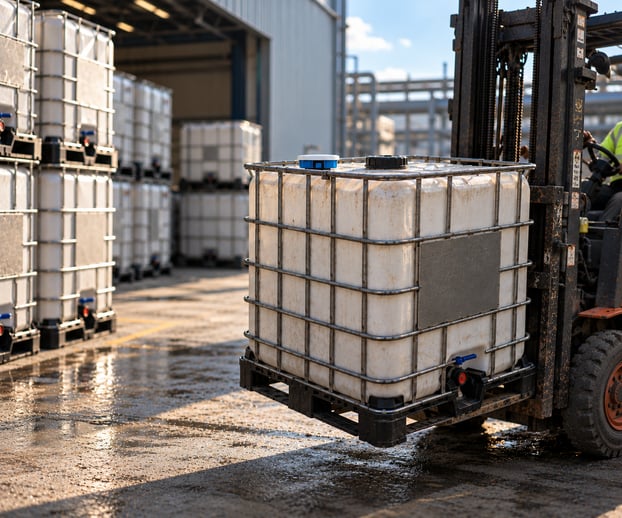
4. Return transport to the IBC depot
After pickup, empty totes are returned to the depot or to a cleaning facility. Especially when dealing with multiple locations and transportation providers, it is often difficult for distributors to track the return process and determine the current location of individual totes.
The Packwise Smart Cap records location and movement data, which can be viewed centrally in Packwise Flow 2.0. This allows distributors to maintain an overview of their tote fleet, track return shipments more effectively, and manage tote inventories more efficiently across all locations.
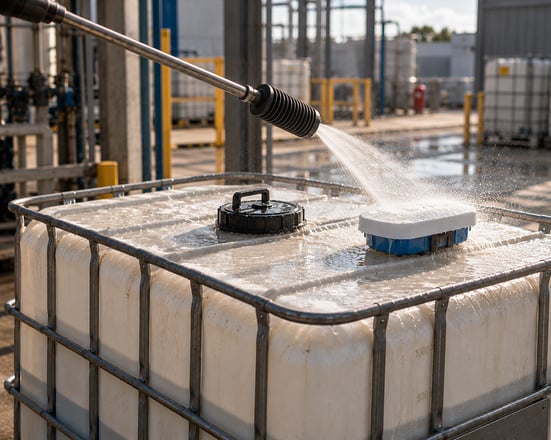
5. Cleaning and Maintenance
Before a returned IBC can be reused, it must be cleaned - and, if necessary, maintained - depending on the product and applicable requirements. This is crucial for safe reuse, particularly in the chemical industry. Efficient coordination between distributors, depots, and cleaning service providers helps prevent unnecessary downtime.
With Packwise Flow 2.0, equipped totes can be digitally identified and their locations tracked. This allows distributors to better schedule returned totes into cleaning and maintenance processes and simplify their organization. The work performed is documented separately.
 6. Inspection and Compliance
After cleaning and maintenance, the totes must be inspected to ensure they remain fit for service in accordance with applicable regulations. Especially with large tote fleets, it is important for distributors to maintain an overview of inspections performed, approvals granted, and necessary actions.
The Packwise Smart Cap supports the digital tracking and tracing of equipped totes using location and movement data. This gives distributors a better overview of their tote fleet and allows them to organize inspection processes more efficiently. The actual inspection results and approvals must still be documented separately.
7. Return and Reuse
After successful cleaning, maintenance, and inspection, the tote can be refilled and delivered again. This starts the cycle all over again. Rapid reuse is crucial for distributors to efficiently utilize existing tote capacity and reduce the need for additional totes.
Packwise Flow 2.0 centrally provides location, fill level, and movement data. Combined with separately documented cleaning and inspection information, distributors can better plan the reuse of their totes, coordinate available capacity across locations, and deploy their fleet more efficiently.
 Packwise provides transparency across the entire tote lifecycle
The seven stages illustrate how many different processes and stakeholders come together within a tote lifecycle. From the initial filling to the next deployment, a great deal of information must be recorded, shared, and taken into account during planning.
Without digital support, this often results in a fragmented information landscape. Data on fill levels, locations, and tote movements is stored in different systems or must be manually entered. As a result, distributors often lack a centralized overview of the actual status of their tote fleet. This is where Packwise comes in, offering a combination of intelligent sensor technology and a centralized software platform.
The Packwise Smart Cap: totes Become Digital Data Sources
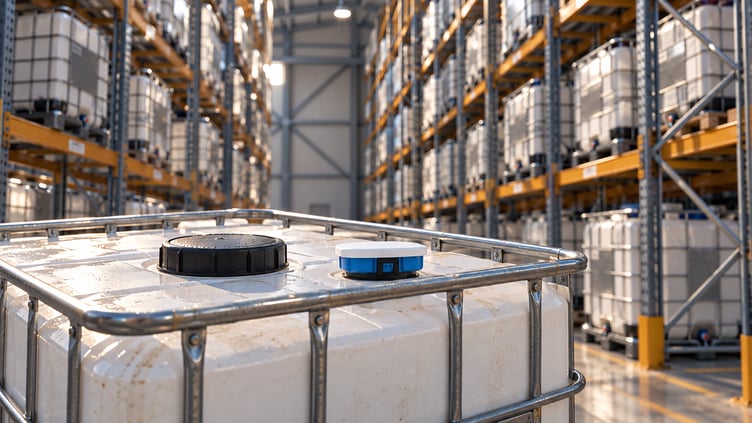
The Packwise Smart Cap is attached to compatible totes and records relevant information such as fill level, location, temperature, and movement. As a result, totes - which were previously often viewed merely as passive transport and storage vessels - become digital data sources. Distributors gain additional insights into how their totes are being used and can better track changes within the tote cycle.
A key advantage is that the information does not have to be collected exclusively through manual checks at each location. Instead, fill levels can be viewed remotely and factored into future planning. This is particularly relevant when totes are spread across many customer locations and regular on-site inspections would involve considerable effort.
Packwise Flow 2.0: A Centralized View of All Relevant tote Data
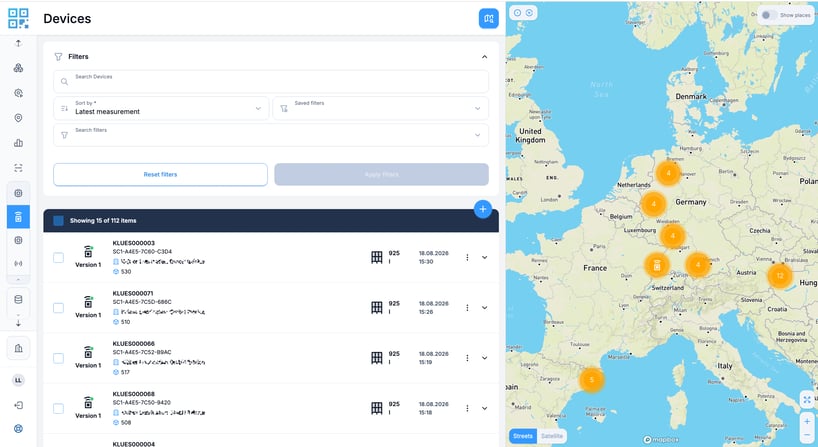
The sensor data collected is consolidated centrallyin Packwise Flow 2.0 and presented clearly. The software platform enables distributors to monitor their tote fleet using up-to-date fill level, location, and consumption data and to use this information to make operational decisions.
For example, this makes it possible to identify upcoming empty totes early on, plan replenishments based on demand, and better coordinate pickups. As a result, various processes can be coordinated more efficiently using a shared database.
In addition, the SaaS platform enables the integration of relevant data into existing enterprise systems - such as ERP or business intelligence applications—via APIs and webhooks. This allows information to be shared across systems and helps prevent data silos.
 Four Key Benefits for Distributors
1. Greater transparency across the entire tote fleet
Digital monitoring gives distributors a better overview of tote locations, fill levels, and movements. This makes it easier to track which totes are at the customer’s site
and which have already been returned.
2. More efficient management of deliveries and returns
Real-time fill level data enables more demand-driven planning of restocking and tote pickups.
Transport operations can be better coordinated, and unnecessary trips can be reduced.
3. Data-Driven Planning of tote Capacity
A transparent overview of the use of existing totes helps distributors better estimate their actual tote needs.
This can help avoid excessive safety stock and make more economical use of the existing fleet.
4. Improved Traceability and Digital Documentation
Location and movement information make it easier to assign and track totes. In conjunction with supplementary process and inspection data, this can support the management of documentation and compliance requirements. As a result, digital tote monitoring goes beyond simply locating totes. It lays the foundation for a better understanding of their usage and for optimizing entire circulation cycles in a more targeted manner.
5. Sustainable Cost Savings Through Optimized tote Cycles
The benefits of digital tote tracking directly contribute to cost-effectiveness: Fewer unnecessary transports lower logistics costs, better utilization of the tote fleet reduces the need for additional totes, and optimized turnaround times decrease capital tied up in inventory. At the same time, the effort required for manual checks and administrative processes is reduced. This enables distributors to lower their operating costs over the long term, utilize existing resources more efficiently, and increase the profitability of their tote fleet.
Economic Benefits: Why Digital tote Cycles Can Be Worthwhile for Distributors
In addition to improved transparency, the digitization of tote cycles also offers economic potential. A key cost factor is the number of totes required. If totes are not returned for extended periods or remain idle at various locations, additional IBCs may need to be purchased to ensure a steady supply to customers.
By gaining a better overview of locations, fill levels, and returns, distributors can identify where such delays occur. This allows for more targeted use of existing tote capacity.
Fewer Unnecessary Transports
Transportation costs are another economic factor. If restocking and return trips are planned independently of one another, this may result in additional trips that could be avoided through better coordination. Real-time fill level data can help identify upcoming restocking needs early on. At the same time, it becomes easier to estimate when a tote is likely to be ready for pickup.
Based on this information, shipments can be coordinated more efficiently, and existing delivery trips can be combined with return trips where appropriate. This can not only reduce logistics costs but also lower fuel consumption and transportation-related emissions.
Shorter downtime and improved tote utilization
Long downtime has a direct impact on the profitability of a tote fleet. A tote, that is already empty but remains with the customer for several more weeks, cannot be reused during that time . Digital fill-level monitoring allows such situations to be identified earlier. Distributors can prepare return trips in a timely manner and better plan the tote’s further use.
What matters here is not only the number of available IBCs, but also the speed at which they complete a full cycle. The more efficiently filling, use, return, and redeployment are organized, the more frequently suitable totes can be deployed within a given time period.
Less manual administrative effort
The internal organization of tote fleets also incurs costs. If employees have to regularly check fill levels, track tote locations, or manually coordinate pickups, this ties up valuable work time . The centralized provision of digital tote data can simplify such processes. Information is available more quickly and does not need to be retrieved anew for every decision.
Especially when dealing with a large number of customers and totes, reducing manual steps can significantly ease the workload on the teams involved. The actual savings achieved depend, among other factors, on the size of the tote fleet, the existing organizational structure, transport routes, and the frequency of tote rotation cycles. An individualized cost-benefit analysis is therefore advisable.
Case Study: Digital Monitoring of Reusable Industrial Totes
The importance of a transparent tote cycle is illustrated by the example of a distributor that delivers chemical products in reusable industrial totes to various customers. The totes are first filled and then delivered to industrial customers. There, they serve as storage and supply totes for various production processes. After being emptied, they must be picked up, transported back, cleaned, and prepared for their next use.
The challenge lies in the fact that the totes are at different points in the cycle at any given time. Some are currently in use at the customer’s site, others are already empty, while still others are in transit back or at the depot. Without up-to-date data, it is difficult to determine which totes are still in use, which have already been emptied, and when it makes sense to retrieve them.
The Initial Situation: Limited Transparency & High Coordination Effort
In a conventional process, the distributor often only receives information about the status of its totes through feedback from customers or manual inventory checks. As a result, empty totes may remain with the customer for extended periods, even though they are already needed for a new use. At the same time, additional totes must be kept on hand to compensate for potential bottlenecks.
Planning for replenishment deliveries is also difficult when actual product consumption is unknown. Orders are then often placed only once a certain minimum stock level has been reached or the customer requests a new delivery.
The Solution: Digital Monitoring with Packwise
By equipping the totes with the Packwise Smart Cap, fill levels and locations can be monitored remotely. The collected information is consolidated centrally in Packwise Flow 2.0. This gives the distributor a better overview
of how its totes are being used and allows it to identify relevant trends early on.
For example, if it becomes apparent that a tote will soon be empty, arrangements for its return can be made in advance. At the same time, the next product delivery can be better aligned with actual consumption.
Longer periods of inactivity are also easier to identify when it is clear where a tote is located and how its fill level
is changing.
The result: more efficient processes and better collaboration
Digital transparency makes it possible to better coordinate restocking and return shipments, reduce long tote downtime, and use existing totes more efficiently . At the same time, collaboration between the distributor and the customer can improve. Both sides benefit from a more reliable information base, provided that the relevant data is made available accordingly.
The customer gains greater supply reliability, while the distributor can plan its delivery and return processes more effectively. This example illustrates how the digital monitoring of totes can impact multiple areas of the supply chain. The added value arises not only at a single point in the chain but through better coordination of the
entire cycle.
 Reuse requires transparent processes
A reusable tote can only fully realize its benefits if it is actually used multiple times and the necessary return processes are in place. To achieve this, companies must be able to manage their totes reliably. For example, it must be possible to track which totes are in circulation, where they are being used, and when they will be available for reuse.
Without this transparency, totes may remain at individual locations for unnecessarily long periods or fail to be efficiently returned within the supply chain. Digitizing the tote cycle can help reduce such challenges.
How Packwise Supports the Organization of Reusable Systems
The Packwise Smart Cap collects location, fill level, and movement data, which is centrally aggregated in Packwise Flow 2.0. This gives distributors a better overview of their tote cycles and enables them to plan returns and the reuse of their totes more efficiently.
At the same time, the digitally recorded information provides an important foundation for documenting reusable packaging systems. Packwise thus supports the transparency and organization of reusable systems, although the sensor data alone does not guarantee full PPWR compliance.
Balancing Sustainability and Economic Efficiency
The digitization of tote cycles not only offers advantages in terms of regulatory developments but can also align economic and environmental goals. If existing totes can be reused more frequently, the need for additional totes may decrease. At the same time, better-coordinated pickups and deliveries can help avoid unnecessary
transportation.
In this way, more efficient tote management supports a more resource-efficient approach to industrial packaging. Especially for distributors that use large quantities of reusable IBCs, the combination of transparency, efficient logistics, and extended tote use can become a key component of a sustainable supply chain strategy
Conclusion: Greater control over every tote cycle
An efficient tote cycle begins with transparency. Numerous processes must be coordinated - from filling and use to return and reuse. This is particularly crucial for distributors in the chemical industry, as their totes are often spread across many customer locations. Without up-to-date data on fill levels, locations, and movements, efficient fleet management is difficult. This can result in long downtime, unnecessary transport, and excess tote inventory.
With the Packwise Smart Cap and Packwise Flow 2.0, distributors can digitally monitor their tote fleets, plan restocking and pickups more effectively, and utilize existing capacity more efficiently. At the same time, manual administrative processes can be reduced.
The improved traceability also supports the organization of reusable packaging systems. In this way, Packwise lays the foundation for a more transparent, cost-effective, and resource-efficient tote cycle.
Want to know now how you can improve your IBC fleet?
Schedule an appointment with our experts today and learn how Packwise can help you digitize your tote fleet.